
 |

|
Management Challenges for the 21st Century Peter F. Drucker 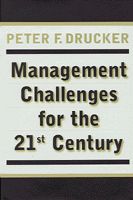

 Format: Paperback, 207pp. ISBN: 9780887309991 Publisher: Harper Business Pub. Date: May 1999 Average Customer Review: 
For Bulk Orders Call: 626-441-2024  Description and Reviews From The Publisher: In his first major new book since Post-Capitalist Society, Peter F. Drucker discusses the new paradigms of management - how they have changed and will continue to change our basic assumptions about the practices and principles of management. Drucker analyzes the new realities of strategy, shows how to be a leader in periods of change, and explains "the New Information Revolution," discussing the information an executive needs and the information an executive owes. He also examines knowledge worker productivity, and shows that changes in the basic attitude of individuals and organizations as well as structural changes in work itself are needed for increased productivity. Finally, Drucker addresses the ultimate challenge of managing yourself while still meeting the demands on the individual during a longer working life and in an ever-changing workplace. About the Author Peter F. Drucker is the Clarke Professor of Social Science and Management at the Claremont Graduate School. Widely regarded as America's leading expert on modern organizations and their management, Dr. Drucker has published 28 books which have been translated into more than 20 languages. Drucker has four children and six grandchildren. He was a hiker and a student of Japan and Japanese art. Table of Contents
Find Items On Similar Subjects  All Items by Peter F. Drucker The Leader of the Future New Rules for the New Economy: 10 Radical Strategies for a Connected World Intellectual Capital: The New Wealth of Organizations All Items by Peter F. Drucker The Leader of the Future New Rules for the New Economy: 10 Radical Strategies for a Connected World Intellectual Capital: The New Wealth of Organizations
 |
|
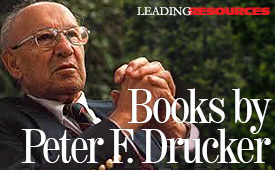
Books by Peter F. Drucker BOOKS TO READ BEFORE YOU LEAD 
The Essential Lists BOOKS TO READ BEFORE YOU LEAD 
Grow Your Leadership Skills NEW AND UPCOMING LEADERSHIP BOOKS 
Classic Leadership Books BOOKS TO READ BEFORE YOU LEAD |
 |
| ||
 | © 2019 LeadershipNow All materials contained in https://www.LeadershipNow.com are protected by copyright and trademark laws and may not be used for any purpose whatsoever other than private, non-commercial viewing purposes. Derivative works and other unauthorized copying or use of stills, video footage, text or graphics is expressly prohibited. |
| |